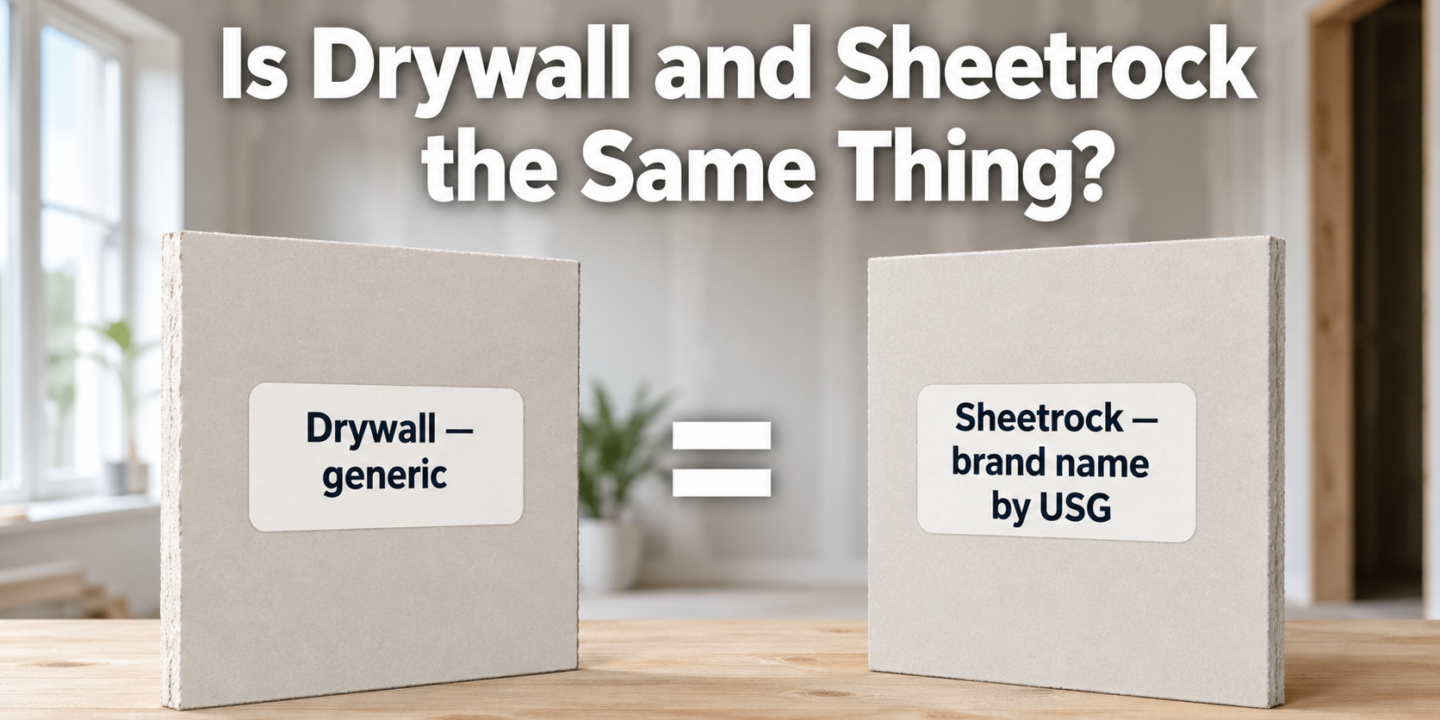



Yes, drywall and Sheetrock are the same thing. Drywall is the generic name for the panels made of gypsum plaster, while Sheetrock is a specific brand name of drywall manufactured by the USG Corporation—much like how people say ‘Kleenex’ when they mean a tissue.
Confusing? A little. But once you understand the relationship, it all makes perfect sense.
Key Takeaways
- Sheetrock and drywall are the same material: It is simply a brand name (owned by USG Corporation) for drywall, like calling all tissues “Kleenex”—not a different product.
- Drywall is the generic term for gypsum plaster panels used in wall construction; it’s also called wallboard, plasterboard, or gypsum board—all describe the same core product.
- Sheetrock-branded drywall and other brands install the same way and deliver similar results; choosing the right type (moisture-resistant, fire-rated, soundproof) matters more than the brand.
- USG’s Sheetrock dominated the market so completely that contractors and homeowners started using it as a catch-all term, creating a “genericized trademark” like Band-Aid or Velcro.
What Is Drywall?
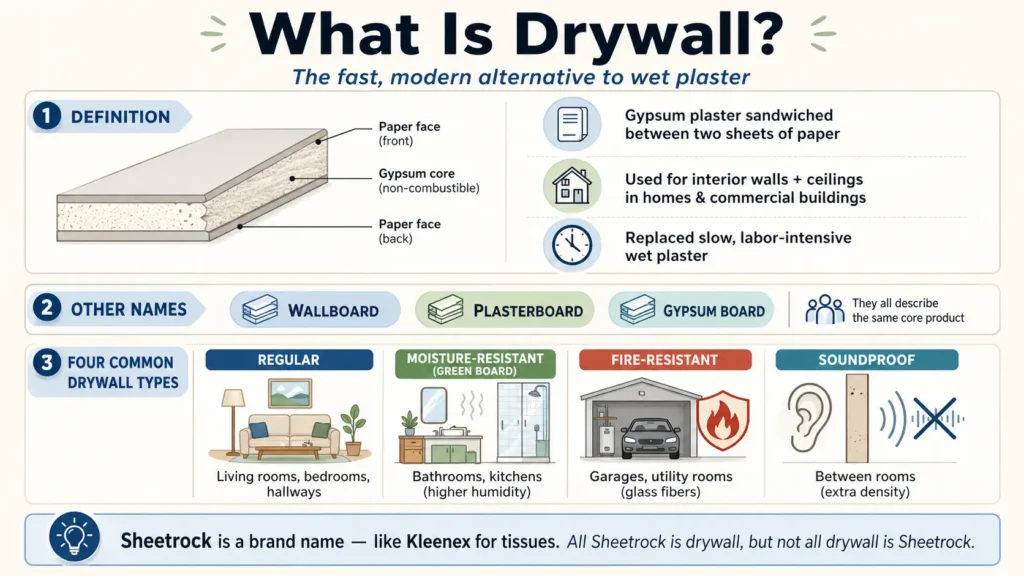
Drywall is the general term for a widely used building material made of gypsum plaster sandwiched between two sheets of paper. It’s used to construct interior walls and ceilings in homes, offices, and commercial buildings. Before drywall came along, walls were built with wet plaster — a time-consuming, labor-intensive process. Drywall changed everything by making wall installation faster, cheaper, and more accessible.
You’ll also hear drywall referred to by a few other names:
- Wallboard
- Plasterboard
- Gypsum board
They all describe the same core product.
Drywall comes in several varieties designed for different situations:
- Regular drywall – The standard option used in most living rooms, bedrooms, and hallways
- Moisture-resistant drywall – Often called “green board” due to its color, it’s used in bathrooms and kitchens where humidity is higher
- Fire-resistant drywall – Contains glass fibers for extra fire protection, commonly required in garages and utility rooms.
- Soundproof drywall – Designed with extra density to reduce noise between rooms
Regardless of the type, all of these products fall under the broad category of drywall. Sheetrock, as you’ll see next, is simply one well-known name within that category.
What Is Sheetrock?
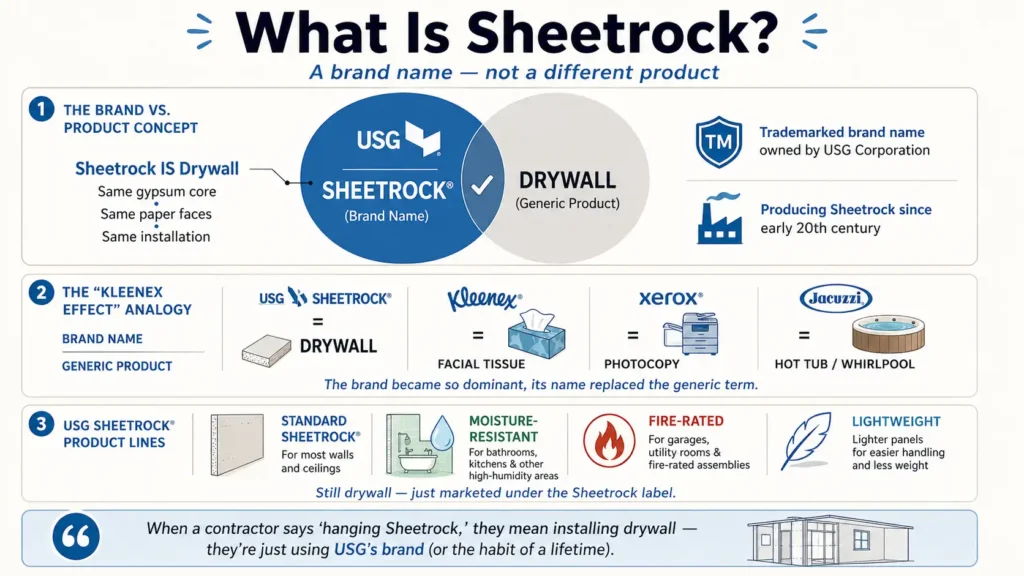
Sheetrock is a trademarked brand name owned by USG Corporation, one of the oldest and most recognized manufacturers of building materials in the United States. As USG Corporation’s own explanation of Sheetrock vs. drywall makes clear: all Sheetrock panels are drywall, but not all drywall is Sheetrock
USG has been producing drywall products under the Sheetrock name since the early 20th century, and over the decades, the brand became so dominant in the market that its name practically replaced the generic term.
Here’s the key point: Sheetrock IS drywall. It’s made from the same gypsum core, covered in paper, and installed the same way. There is no special secret ingredient or fundamentally different manufacturing process.
That distinction becomes important when comparing drywall to products like blueboard, which may look similar but are intended for veneer plaster finishes rather than standard drywall finishing methods.
When a contractor says they’re hanging Sheetrock, they mean they’re installing drywall — they just happen to be using USG’s branded version, or they’re using the term out of habit.
USG does offer a range of Sheetrock product lines, including moisture-resistant panels, fire-rated boards, and lightweight options designed to be easier for contractors and DIYers to handle. But these are still drywall products — just marketed under the Sheetrock label.
Why Do People Confuse Drywall and Sheetrock?
This kind of confusion happens all the time with popular brands. Consumers and even professionals use a brand name so frequently that it becomes the default term for an entire product category. This is called a genericized trademark, and it happens more often than you’d think.
Other familiar examples include:
- Band-Aid (for any adhesive bandage)
- Velcro (for any hook-and-loop fastener)
- Chapstick (for any lip balm)
Sheetrock followed the same path. USG’s product became so common on job sites that workers, contractors, and homeowners simply started calling all drywall “Sheetrock” — regardless of who made it.
This is especially common in certain regions of the United States, where “Sheetrock” is the word everyone uses on the job site, no questions asked. Walk into a building supply store in some parts of the country and ask for “drywall,” and you might get a perfectly normal response. In other areas, workers might only ever say “Sheetrock” and look at you blankly if you say something different.
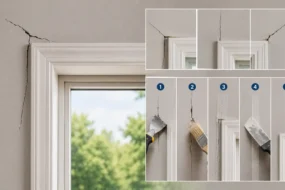
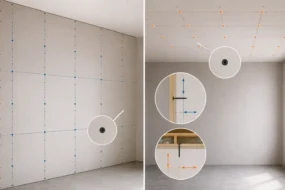
The bottom line: the regional variation in terminology doesn’t change the material. Whether someone calls it drywall, Sheetrock, gypsum board, or wallboard, they’re almost always talking about the same product. However, no matter the name, proper installation is key to preventing cracks in large spans, which is why it is essential to understand what a drywall control joint is and where to place one.
Practical Differences Between Drywall and Sheetrock
For the average homeowner or DIYer, there are no meaningful differences between Sheetrock-branded drywall and other drywall brands. The material, installation process, finishing steps, and end result are all essentially the same.
That said, there are a few minor points worth knowing:
- Quality consistency – USG’s Sheetrock line has a long-standing reputation for quality and consistency, which is why many professional contractors prefer it. Other brands are equally functional but may vary slightly in weight, paper texture, or edge finish.
- Product-specific features – Some Sheetrock product lines, like their Sheetrock Brand UltraLight panels, are engineered specifically to be lighter than standard drywall — a genuine convenience when you’re hauling sheets overhead. Other manufacturers offer similar products, but USG has heavily marketed these innovations under the Sheetrock name.
- Price point – Name-brand Sheetrock can sometimes cost slightly more than store-brand or alternative drywall products. For large projects, that difference can add up, though many contractors argue the quality is worth it.
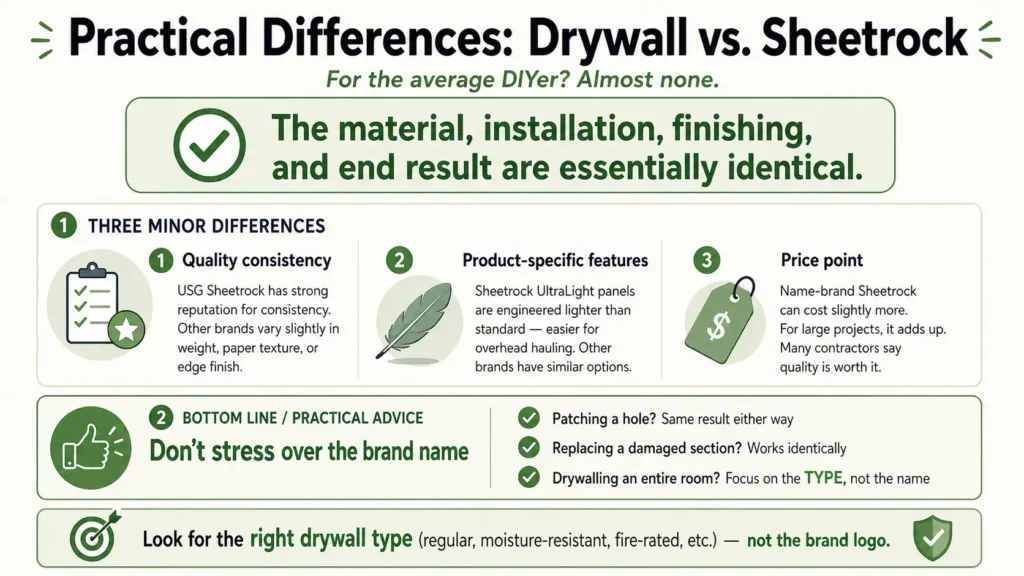
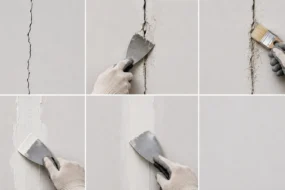
In practical terms: if you’re patching a hole in your wall, replacing a damaged section, or drywalling an entire room, you don’t need to stress over whether you’re buying Sheetrock or another brand. Look for the right type of drywall for your application—for instance, if you are installing fire-rated panels, you’ll need to know what size drywall screws for 5/8 drywall to ensure a secure hang. As long as you choose the right thickness and type (regular, moisture-resistant, etc.) for the job, you’ll be in good shape.
Should You Care About the Difference?
For most home renovation projects, no, you don’t need to stress about the brand. What matters far more than whether the label says “Sheetrock” is choosing the right type of drywall for the job.
Here’s a simple way to think about it:
| Situation | What to Look For |
| Standard room walls or ceilings | Regular ½-inch drywall |
| Bathroom or kitchen walls | Moisture-resistant (green board) |
| Garage or utility room | Fire-rated drywall |
| Home theater or bedroom | Soundproof or high-density drywall |
Once you’ve identified the right type, you can choose any reputable brand — Sheetrock included — and the results will be essentially the same.
If you’re working with a contractor, they’ll likely use whatever brand they’re most comfortable with or have access to through their supplier. It’s completely fine to ask what brand they’re using, but it rarely changes the project’s outcome.
The Bottom Line
Drywall and Sheetrock are not two different materials. Sheetrock is simply a brand of drywall — a very popular one — made by USG Corporation. Over time, the brand name became so widely used that many people now use “Sheetrock” to mean any drywall, regardless of brand.
For your next home project, focus on choosing the right type of drywall for the job, not the brand name on the package. Whether it says Sheetrock, National Gypsum, CertainTeed, or anything else, you’re working with the same fundamental material.
Now that you know the difference, you can walk into any hardware store, talk to any contractor, and understand exactly what they mean — no matter which word they use.


Elena Hart is the founder and lead writer of Better Home Pro. She writes about drywall, home repair, and practical DIY home improvement topics, focusing on clear, useful information that helps homeowners make better decisions. Her work combines firsthand experience, manufacturer documentation, industry resources, and careful research to create content that is accurate, practical, and easy to understand. Through Better Home Pro, Elena aims to simplify complex home improvement topics and provide guidance that is genuinely helpful to homeowners and DIYers.











No Comments