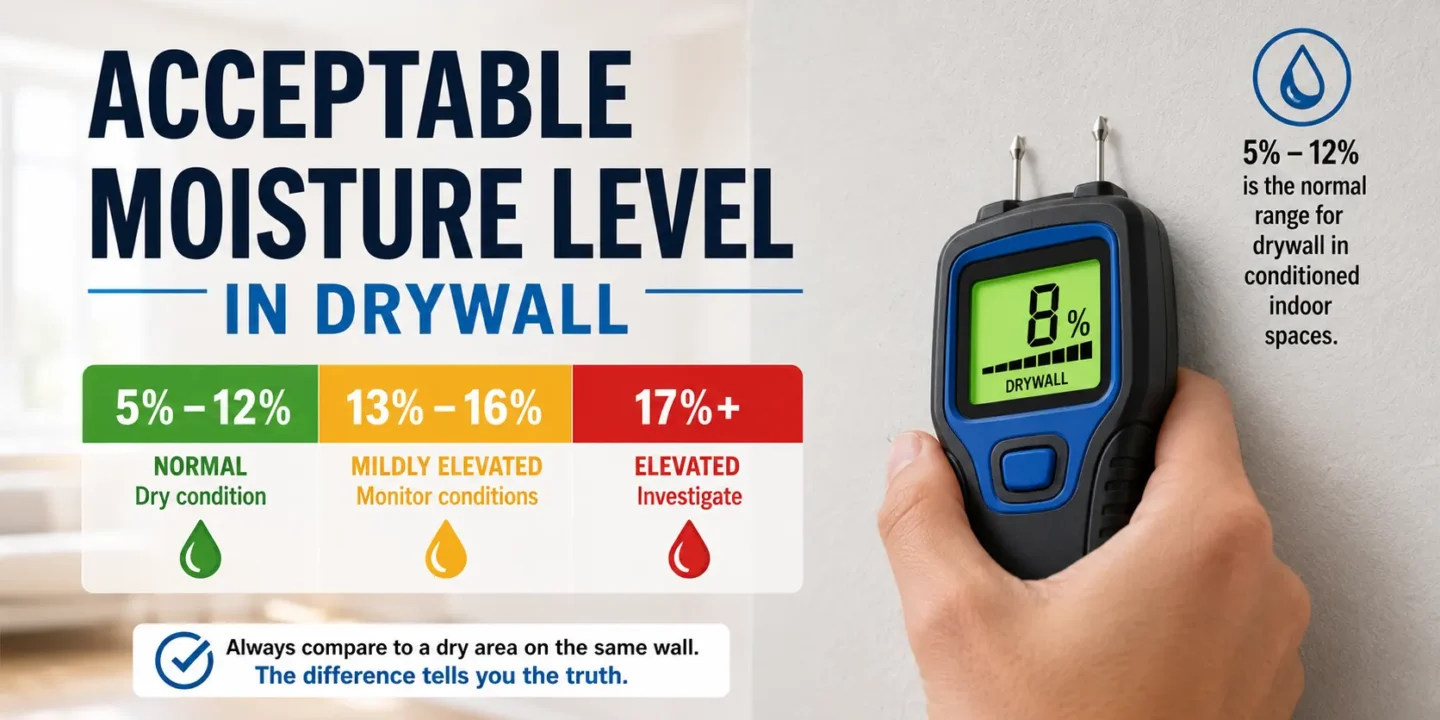



Most drywall in a normal indoor environment reads between 5% and 12% on a pin-type meter, and in that range, conditions are considered normal. Readings above 15% to 17% indicate potential problems. Above 20%, the material is saturated and likely compromised.
A single number is rarely sufficient alone. What matters more is the comparison between the wet-looking area and surrounding dry sections of the same wall. If adjacent panels read 8% and one spot reads 22%, that spike is meaningful. If the entire wall reads similarly and ambient humidity is high, it is a different situation. Context determines reading accuracy, not the number alone.
Different meters also report differently. A pin meter gives a moisture-content percentage. A pinless meter gives a relative reading, sometimes on a scale of 0 to 100, that signals moisture density behind the surface. Both are valid, but they work differently, and comparing numbers across meter types is unreliable.
Key Takeaways
- A moisture reading of 5% to 12% is typical for conditioned indoor spaces, but readings alone are unreliable without a dry baseline from the same wall.
- Pin meters only measure surface moisture at the point of contact, so they can report a safe reading even if the gypsum core or wall cavity behind the paint is saturated.
- Moisture levels sustained above 17% for more than 48 hours often trigger irreversible structural damage and mold growth because the organic paper facing provides a suitable growth surface for spores.
- Meters must be specifically calibrated to a drywall or gypsum setting because using the default wood mode produces artificially inflated readings that lead to unnecessary teardowns.
- Drywall can often recover from brief exposure to clean water if dried quickly, but contact with contaminated black water or prolonged saturation requires immediate replacement regardless of how dry it feels later.
What Is Considered an Acceptable Moisture Level in Drywall?
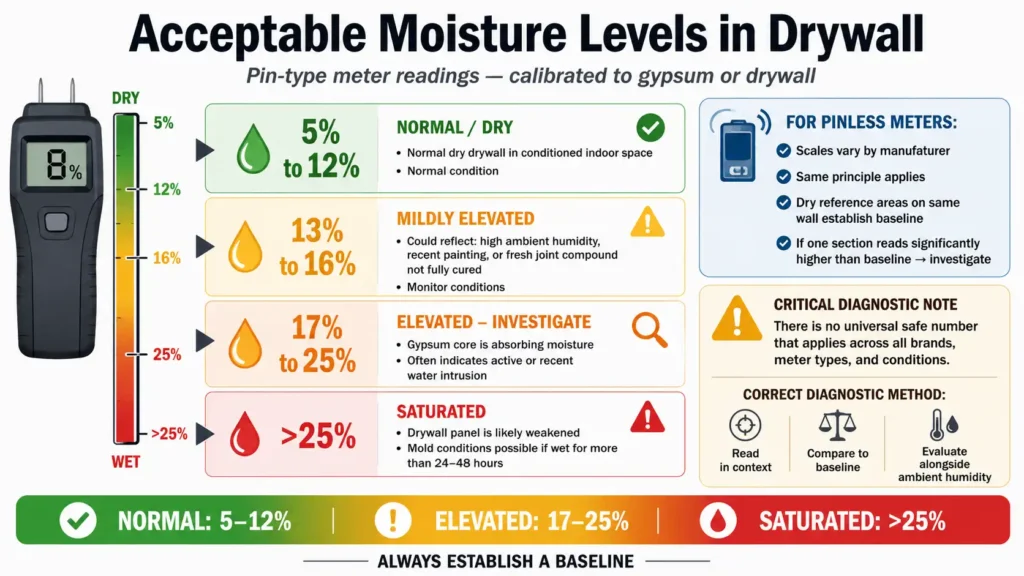
For pin-type meters calibrated to gypsum or drywall, here is a breakdown of typical readings:
- 5% to 12%: Normal dry drywall in a conditioned indoor space. Normal condition.
- 13% to 16%: Mildly elevated. Could reflect high ambient humidity, recent painting, or fresh joint compound that has not fully cured. Monitor conditions.
- 17% to 25%: Elevated and worth investigating. The gypsum core is absorbing moisture. This range often indicates active or recent water intrusion.
- Above 25%: Saturated. The drywall panel is likely weakened, and mold conditions are possible if it has remained wet for more than 24 to 48 hours.
For pinless meters, scales vary by manufacturer, but the same principle applies. Dry reference areas on the same wall should establish a baseline. If one section reads significantly higher than the baseline, that area requires investigation.
There is no universal safe number that applies across all brands, meter types, and conditions. A reading interpreted in context, compared to baseline, and evaluated alongside ambient humidity is the correct diagnostic method.
How Moisture in Drywall Is Measured
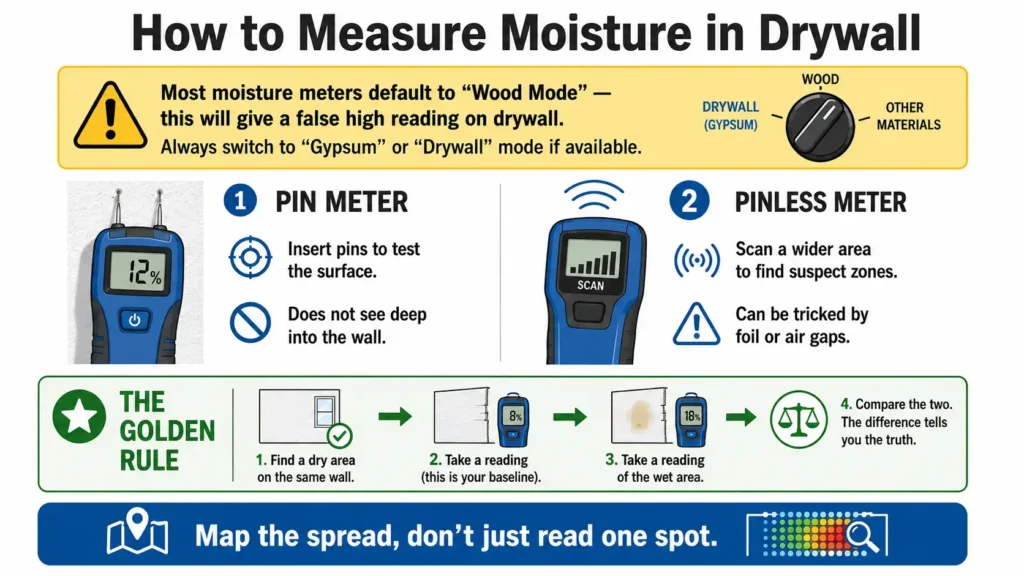
Moisture meters measure electrical resistance (pin-type) or electromagnetic signals (pinless) in the tested material. Wood is the calibration standard most meters default to; therefore, selecting the correct material mode matters. Drywall behaves differently from lumber, and a meter left in wood mode will overread on gypsum.
Pin meters require inserting two small pins into the drywall surface. They measure moisture between those two points, so they assess the board face rather than deeper cavity conditions or insulation moisture. They are useful for surface assessment, but if you are beginning diagnostic work, learning how to properly use pin-type moisture meters with other tools is covered in our guide to essential drywall tools.
Pinless meters scan a wider area without penetrating the surface, which is useful for screening. They are sensitive to air gaps, dense materials, and foil-faced insulation, which can distort readings. They work well for identifying suspect zones but are less reliable for precise moisture-content values.
The most useful field technique is comparative testing. Take readings from a clearly dry area of the same wall material, note that value, then compare it against the suspect area. The differential between readings is what matters. An inspector is not reading one isolated point but mapping the spread.
What Causes Elevated Moisture Readings in Drywall?
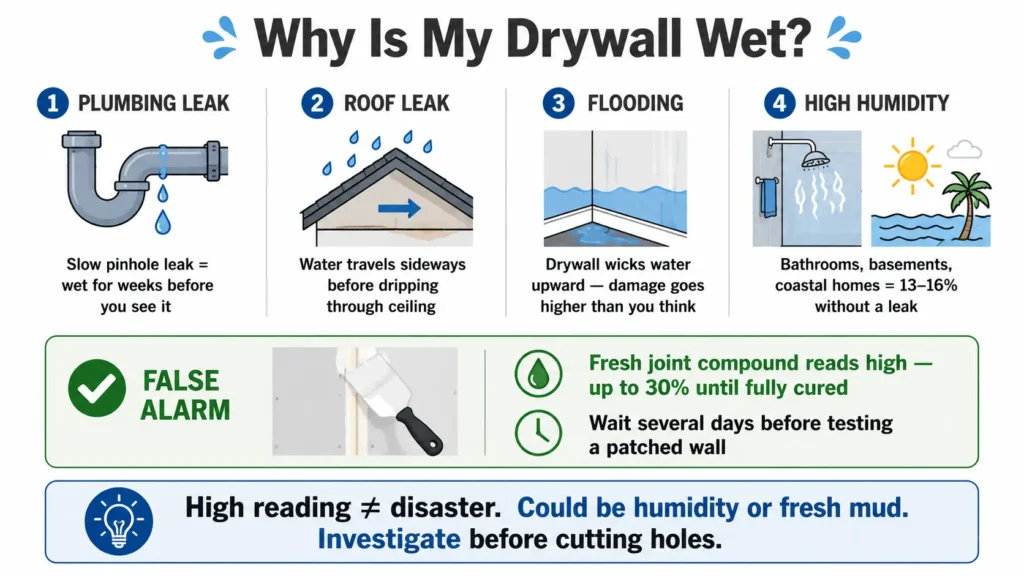
Plumbing leaks are common sources of elevated readings. A slow pinhole leak behind a wall can saturate drywall for weeks before visible signs appear.
Roof leaks behave similarly and often appear on ceilings long after water has traveled laterally from the original entry point. In severe cases, prolonged moisture exposure can eventually require partial or complete drywall ceiling replacement.
Flooding from burst pipes, appliance failures, or groundwater causes rapid, widespread saturation. Drywall in lower wall sections tends to wick water upward, sometimes higher than expected.
High ambient humidity alone can push borderline readings upward. Bathrooms without proper ventilation, basements with poor vapor control, and homes in coastal climates often show readings in the 13% to 16% range without a discrete leak. That condition still requires management, but it differs from structural water intrusion. If you are finishing a basement or bathroom, choosing the right material from the start helps prevent these chronic issues. Our comparison of green board vs purple board drywall explains which moisture-resistant panel works best for each situation.
Fresh joint compound is commonly misunderstood. New mud on a patch or repair can read above 30% until fully cured, which may take several days depending on product type and airflow. If testing a recently patched wall, consider that before interpreting readings.
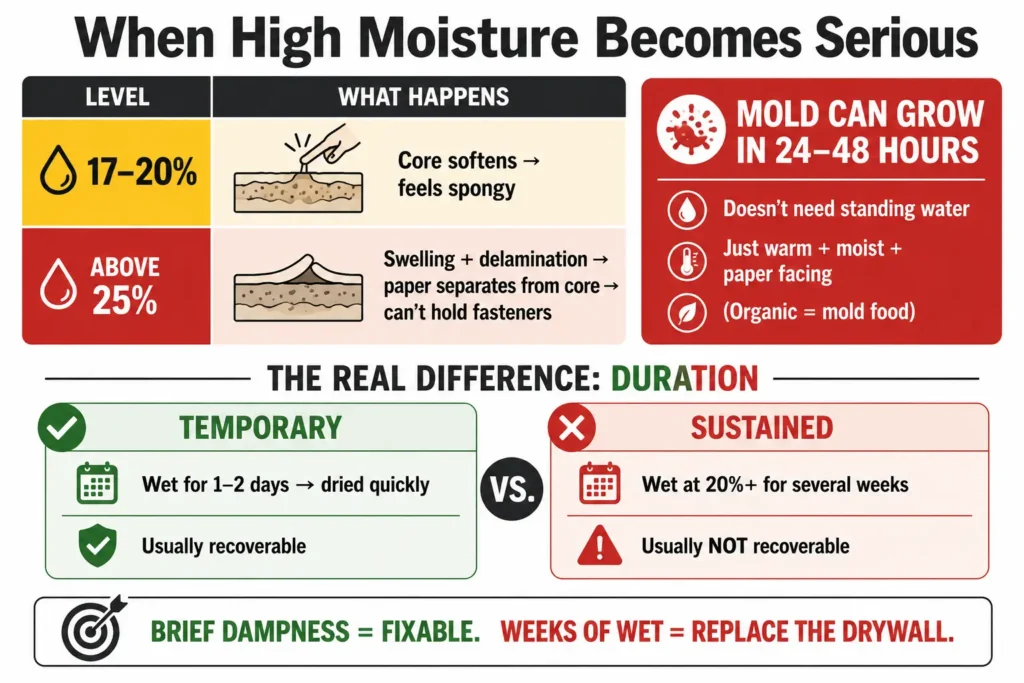
When High Moisture Becomes a Serious Problem
Drywall consists of gypsum sandwiched between paper face sheets. Gypsum is calcium sulfate, and it absorbs water readily. Once the paper facing becomes saturated, the structural integrity of the panel fails.
At sustained moisture levels around 17% to 20%, the gypsum core begins softening. Pressing the surface may reveal a spongy give that dry drywall does not have. Above 25%, swelling and delamination become common. The paper face separates from the gypsum core, and the panel loses its ability to hold fasteners or support loads.
Mold growth on drywall paper can begin within 24 to 48 hours in warm, moist conditions. It does not require visible water. Surface condensation or elevated moisture content alone is sufficient. The paper facing is organic and is the first material to support growth. This vulnerability is one reason some builders choose paperless drywall in areas with recurring moisture concerns
According to the EPA guide on mold remediation in schools and commercial buildings, controlling moisture is the only way to prevent mold growth, as spores are ubiquitous in indoor environments.
The difference between manageable damage and non-recoverable damage depends on duration. A panel briefly exposed to water and dried within one or two days differs from a panel remaining at 20% moisture for several weeks. Temporary dampness is often recoverable. Sustained saturation is usually not recoverable.
Why Drywall Can Still Feel Dry Even When Moisture Is High
A common misconception is that painted drywall can feel completely dry to the touch while the gypsum core behind the paint film still contains significant moisture.
Paint functions as a partial vapor barrier. It slows moisture absorption into the surface and slows moisture release. When water enters from behind the wall through pipe leaks or cavity condensation, the gypsum core can become saturated without the surface feeling wet.
The paint surface may show efflorescence, or the wall may feel slightly cool, but neither reliably indicates internal moisture conditions. That is why a moisture meter is useful because it measures beyond tactile inspection.
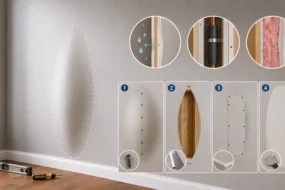
Another issue is hidden cavity moisture. Insulated wall assemblies can trap moisture behind insulation batts while keeping the drywall surface relatively dry. Surface scans cannot detect it. Drilling a small inspection hole or using a deep-probe moisture sensor is sometimes the most reliable method for confirming internal conditions. For further information on detecting hidden issues, including those caused by pests, our guide on early signs of termites in drywall offers additional context on using moisture meters in diagnostic processes.
How Long Drywall Takes to Dry After Getting Wet
Under good conditions, including low ambient humidity, strong airflow, and no insulation trapping moisture, a slightly damp drywall surface can dry within two to three days. A panel affected by a contained appliance leak may recover within four to five days when fans and dehumidifiers operate continuously.
Walls containing insulation dry much more slowly because insulation retains moisture and limits airflow through the assembly. Basement and bathroom walls often experience ongoing humidity that slows or prevents drying.
Some drywall does not fully recover even after meter readings return to dry levels. The paper facing may remain compromised, the gypsum core weakened, or microbial growth may already exist. A panel reading 9% after drying is not necessarily structurally sound if it remained at 30% moisture for an extended period.
When Drywall Should Be Dried vs Replaced
For minor exposure, such as brief water contact, a small leak caught early, or elevated ambient humidity that has been corrected, drying is a reasonable approach if the drywall remains structurally sound and readings continue declining.
Replacement becomes more likely when:
- The moisture source involved contaminated water such as sewage, groundwater, or floodwater
- Readings remained elevated for more than 48 to 72 hours in warm conditions
- The panel shows visible softening, swelling, or surface separation
- Mold is visible or suspected behind the wall
- The gypsum core crumbles or feels chalky
Clean water damage detected early is the best condition for drying. Proper installation details, ventilation planning, and moisture management strategies all influence how well drywall performs over time and how vulnerable it is to future moisture-related problems.
Most other situations favor replacement. The decision to replace is often determined by the category of water. The IICRC S500 standard for professional water damage restoration emphasizes that materials saturated by Category 3 water, which contains significant pathogens, must be removed and replaced for health reasons.
If there is uncertainty about whether drying succeeded, take a follow-up reading seven to ten days after drying. If readings return to baseline and match adjacent dry areas, the panel likely recovered. If readings remain elevated, replacement is the more appropriate solution.


Elena Hart is the founder and lead writer of Better Home Pro. She writes about drywall, home repair, and practical DIY home improvement topics, focusing on clear, useful information that helps homeowners make better decisions. Her work combines firsthand experience, manufacturer documentation, industry resources, and careful research to create content that is accurate, practical, and easy to understand. Through Better Home Pro, Elena aims to simplify complex home improvement topics and provide guidance that is genuinely helpful to homeowners and DIYers.






No Comments