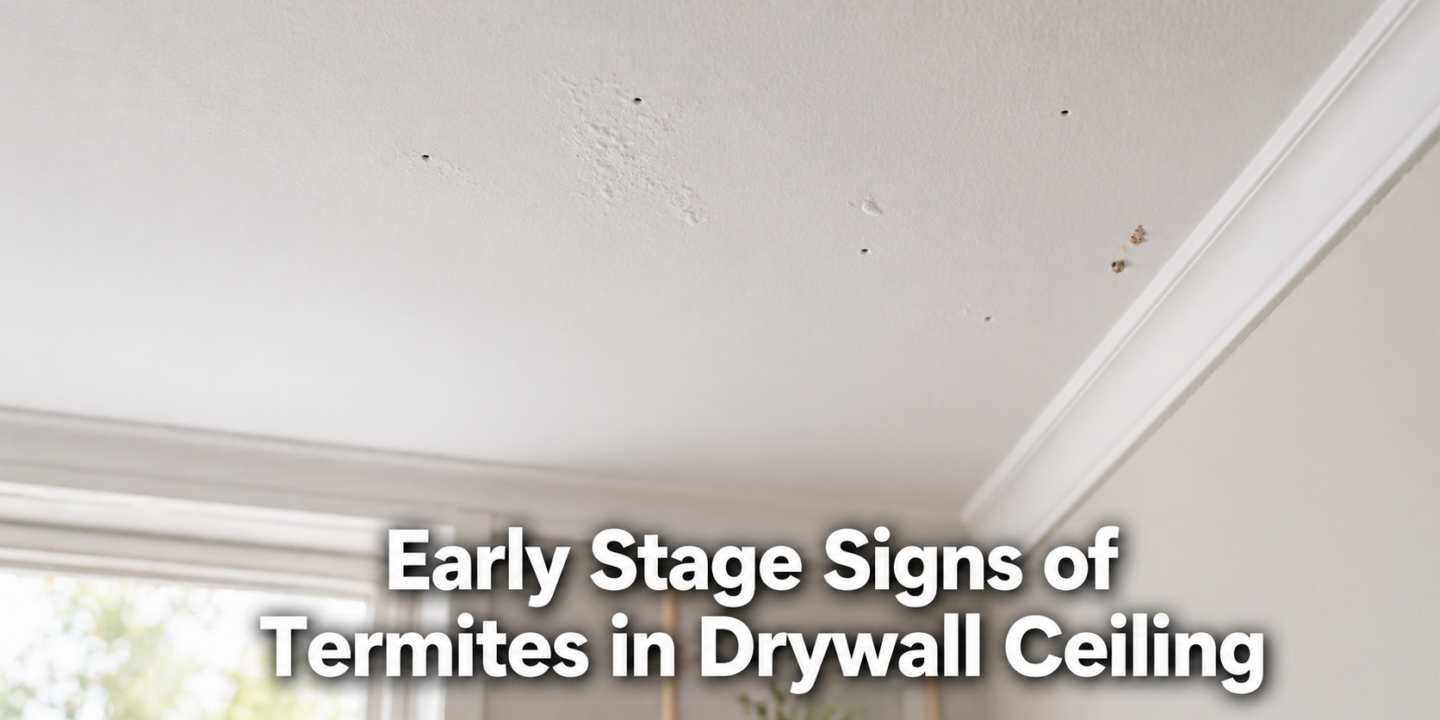



Termites can affect drywall ceilings early on. While many associate termite damage with floors or baseboards, subtle ceiling signs can appear before a visible infestation.
Early clues often include drywall that feels hollow or papery when tapped, faint bubbling or blistering in the paint, slight sagging between joists, or thin hairline cracks that slowly expand.
Because the damage first occurs behind the drywall in the wood framing above the ceiling, the surface changes are usually mild and easy to dismiss. Knowing what these early ceiling symptoms look like can help you determine whether you’re seeing normal cosmetic wear or the beginning of termite activity.
Key Takeaways
- Termites can travel upward through wall framing and damage ceiling joists long before visible signs appear.
- Early ceiling signs are subtle: dry bubbling paint, hollow sounds, faint discoloration, hairline cracks, or slight sagging.
- Termite damage is usually dry, gradual, and irregular — unlike fast-spreading water stains or straight settling cracks.
- If ceiling changes feel “off” without a clear water source, document them and schedule a professional inspection early.
Why Termites Can Show Up in Ceiling Drywall
Termites cause billions of dollars in structural damage annually, and most property owners have no idea they’re there until significant harm has already occurred. The EPA’s guide to identifying and controlling termites confirms that termites rarely emerge from soil, mud tubes, or the wood they’re consuming — meaning surface signs are the only early warning system homeowners realistically have.
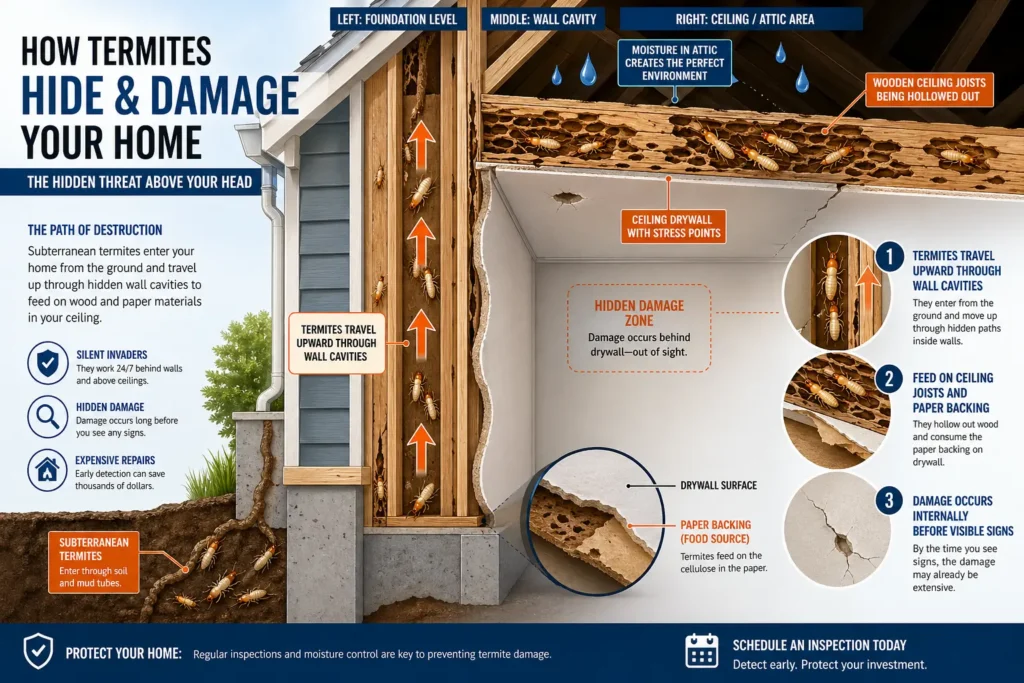
The most common form in the U.S. is the native subterranean termite, which enters at ground level but travels upward through wall framing and structural wood.
Ceilings become involved when:
- Termites reach upper wall cavities.
- They begin feeding on wooden ceiling joists (horizontal beams that support the ceiling structure).
- Moisture accumulates in attic or roof areas, creating a more favorable environment.
Understanding acceptable drywall moisture levels can help determine whether hidden moisture is contributing to conditions that attract pests.
Drywall itself isn’t their primary food source — termites feed on the paper backing and the wood behind it. As they hollow out framing members above the ceiling, the drywall attached to that structure can begin to show subtle stress.
The critical thing to understand is that ceiling damage is internally early but visually late. Penn State Extension’s research on how subterranean termites damage structural timbers over time explains that when structural damage becomes evident, it is usually the result of years of infestation — termite problems typically only surface a decade or more after construction.
By the time you notice surface changes in the ceiling, termites may have been feeding on joists and framing above you for months or longer.
Early Stage Signs of Termites in Ceiling Drywall
Below are the subtle, often-overlooked signs that may suggest termite activity in ceiling drywall.
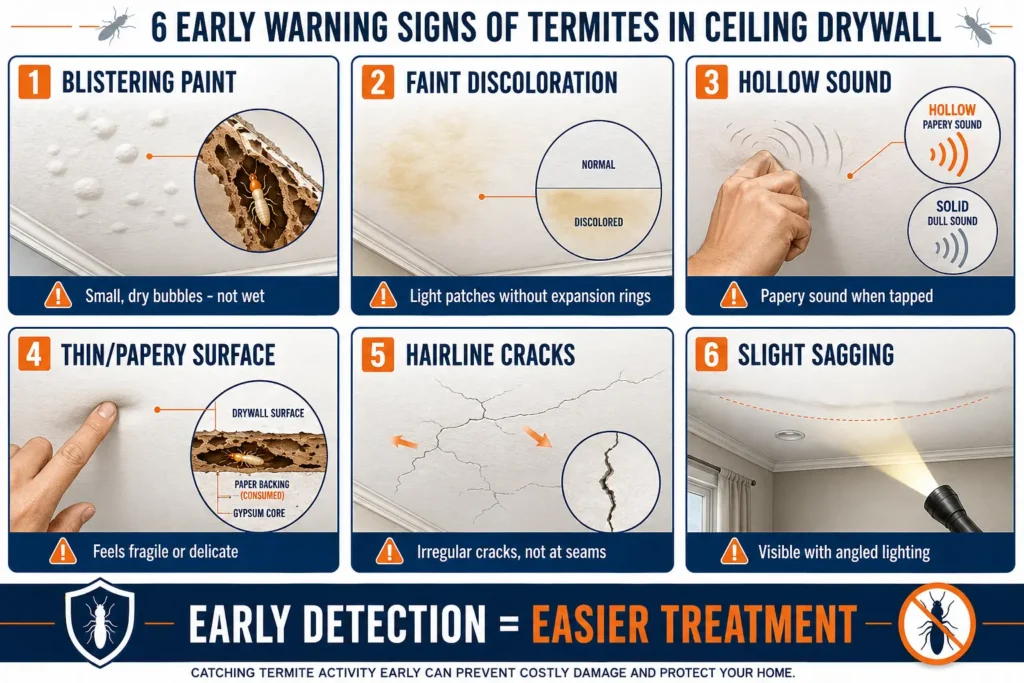
1. Blistering or Bubbling Paint
If you see small bubbles or raised patches in ceiling paint without a known leak, termites could be tunneling behind the drywall.
Why does it happen:
As termites consume the wood framing, the structural support weakens slightly. Moisture introduced through mud tubes or condensation within damaged wood can push the drywall paper outward, creating faint blistering.
Unlike major water damage, these bubbles are often small and dry to the touch.
2. Faint Discoloration Patches
Light yellow or slightly darker patches may appear without obvious dripping or spreading rings.
Why does it happen:
Termite activity can subtly alter moisture levels in framing. The drywall absorbs minor fluctuations, leading to uneven color changes. These patches usually don’t expand quickly like water stains.
3. Hollow Sound When Tapped
Gently tap different sections of the ceiling using your knuckles.
If one area sounds noticeably more hollow or papery than the surrounding sections, it could indicate a loss of structural backing.
This isn’t just anecdotal advice — the EPA-recommended method for detecting hollow wood involves probing exposed surfaces for hollow spots using a flathead screwdriver or similar tool, a technique that pest inspectors apply to ceilings and walls during evaluations to detect inconsistencies invisible to the naked eye.
Why does it happen:
When termites hollow out wood joists above, the drywall may separate slightly from solid support. The surface remains intact, but the density behind it changes.
Pest inspectors often use tapping tests (gentle knocking) during evaluations to detect inconsistencies in the structure’s soundness.
4. Thin, Papery Drywall Surface
Press lightly on suspicious areas (without forcing pressure). If the drywall feels unusually thin or fragile compared to surrounding sections, that may indicate feeding on the paper backing.
Why does it happen:
Termites don’t eat the gypsum core, but they can consume the cellulose-based paper layers. This leaves the surface feeling weak or delicate.
5. Hairline Cracks That Slowly Spread
Ceiling cracks can be normal — but termite-related cracks tend to:
- Appear in irregular patterns.
- Widen gradually over time.
- Develop away from common seam joints.
Why does it happen:
As the framing above becomes compromised, slight structural shifts occur. The drywall cracks along stress points.
Unlike settling cracks, these may not follow straight lines along taped seams.
6. Slight Sagging or Uneven Texture
Early sagging is subtle. You might only notice it when light hits the ceiling at an angle.
Why does it happen:
If termites weaken joists or furring strips, the drywall can begin to dip between supports. Similar ceiling movement can also occur when drywall is improperly supported or damaged over time. This sagging often progresses slowly and may not be immediately obvious.
Inspectors frequently use side lighting or laser levels (precise tools for measuring straightness and detecting minor deflections) to detect deflections invisible to the casual observer.
Termite Damage vs Water Damage vs Normal Ceiling Cracks
This comparison is critical before assuming the worst.
| Symptom | Termites | Water Damage | Structural Settling |
| Texture | Papery, thin, sometimes hollow | Soft, damp, spongy | Firm, dry |
| Discoloration | Light, faint, slow-spreading | Yellow/brown rings, spreads outward | Minimal or none |
| Crack Pattern | Irregular, expanding slowly | Often accompanied by sagging and stains | Straight along seams |
| Sagging | Gradual, subtle | More pronounced, often with moisture | Rare |
| Smell | Mild musty (sometimes none) | Noticeable damp odor | None |
| Sound When Tapped | Hollow or thin | Soft/dull if saturated | Solid |
Water damage usually progresses faster and includes clear moisture evidence. In moisture-prone spaces such as basements and bathrooms, drywall deterioration is often caused by environmental exposure rather than insects. Structural settling tends to occur along drywall joints and remains stable once it forms.
Termite-related ceiling changes are usually dry, gradual, and inconsistent.
Subtle Indoor Signs That Support Ceiling Termite Activity
Ceiling symptoms become more meaningful when paired with other indoor indicators:
- Clicking sounds inside walls (worker termites communicating)
- Discarded wings near windows or light fixtures
- Mud tubes along walls, corners, or attic framing
- Increased activity during humid conditions
Subterranean termites build mud tubes to retain moisture as they travel upward. If you spot tubes along interior walls leading toward the ceiling, that strengthens suspicion.
Inspectors often correlate ceiling drywall changes with attic framing checks. If mud tubes are present above, ceiling symptoms carry more weight.
What to Do If You Suspect Early Termite Damage
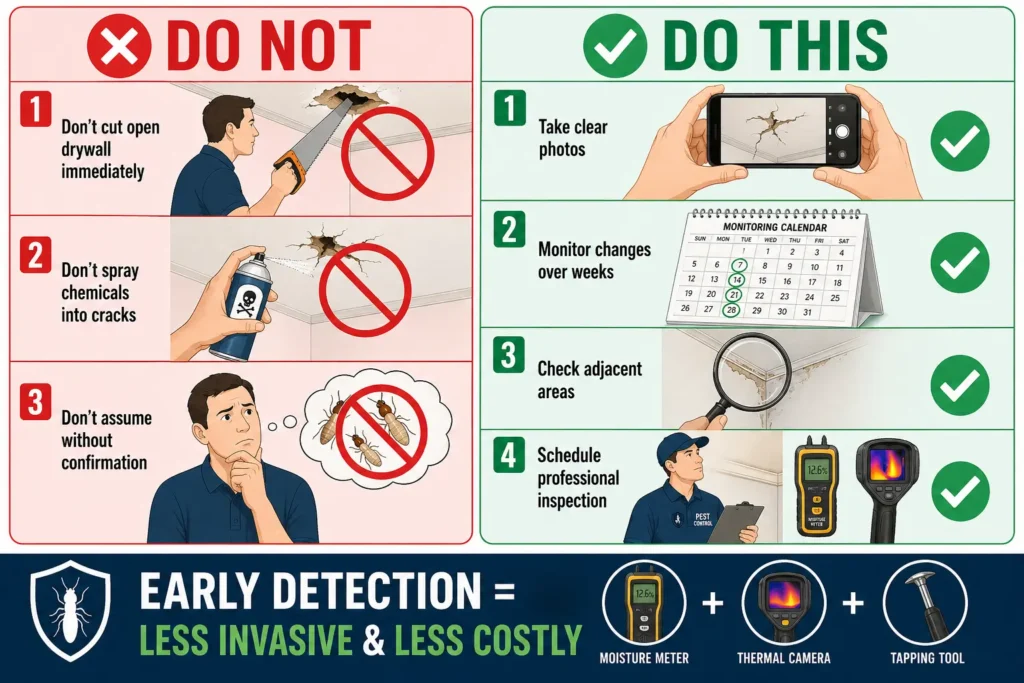
Stay calm and avoid a destructive investigation.
Do not:
- Cut open the drywall immediately.
- Spray chemicals into cracks.
- Assume it’s definitely termites without confirmation.
Instead:
- Take clear photos of the area.
- Note whether cracks or sagging expand over several weeks.
- Check adjacent walls and upper corners.
- Schedule a professional termite inspection.
Early inspections are typically less invasive and far less costly than waiting for visible structural damage.
Pest professionals use moisture meters, tapping techniques, and thermal tools to assess hidden activity without major demolition.
Similar inspection methods are often used before major remodeling projects to identify hidden issues behind finished wall surfaces.
When It’s Likely NOT Termites
Some ceiling issues look suspicious but are unrelated to pests.
It’s probably not termites if:
- Blistering appeared immediately after fresh paint in humid weather.
- Hairline cracks run directly along taped drywall seams.
- There was a recent roof leak above the affected area.
- The ceiling damage appeared suddenly after heavy rain.
Water leaks cause rapid changes. Termite damage develops gradually and quietly.
Why Early Ceiling Infestations Are Often Missed
Most homeowners focus on baseboards and floors when thinking about termites. Ceilings feel unlikely.
But pest inspectors know that by the time visible mud tubes appear in living spaces, termites may already be active in upper framing. Because drywall hides the structure, the first clues are subtle surface shifts — not dramatic collapse.
Early-stage termite damage to ceilings rarely appears catastrophic. It looks questionable. Slightly “off.” Easy to ignore.
Frequently Asked Questions
What Are the First Signs of Termites in a Drywall Ceiling?
The earliest signs often include faint bubbling paint, tiny pinholes in drywall, unexplained discoloration, sagging ceiling sections, and hollow-sounding drywall when tapped. Homeowners may also notice discarded wings near windows or light fixtures before visible structural damage appears.
Can Termites Live Inside Drywall Without Visible Damage?
Yes. Termites commonly tunnel behind drywall and feed on wooden framing members while leaving the painted surface largely intact. This hidden activity can continue for months before obvious signs such as cracks, bulges, or ceiling sagging become visible.
Why Does My Ceiling Sound Hollow in Certain Areas?
A hollow sound can indicate that termites have consumed wood behind the drywall, leaving voids in framing members. While moisture damage can produce similar symptoms, hollow-sounding drywall combined with mud tubes or termite droppings warrants a professional inspection.
What Does Termite Damage Look Like on a Ceiling?
Termite-damaged ceilings may show blistering paint, rippled drywall, hairline cracks, sagging sections, small holes, or dark stains that resemble water damage. In advanced cases, drywall can become soft and crumble when pressed.
How Can I Tell the Difference Between Water Damage and Termite Damage?
Water damage usually creates widespread staining, soft drywall, and mold growth near a leak source. Termite damage is more likely to include mud tubes, hollow-sounding areas, pin-sized holes, discarded wings, or localized drywall distortion without an active water leak.
The Bottom Line
The financial stakes of delayed detection are real. USDA research on the annual cost of subterranean termite damage estimates that $5 to $11 billion is spent annually in the United States alone on prevention, replacement, and repair of subterranean-termite-damaged wood and wood products.
Catching termite activity at the ceiling stage before it escalates to visible structural failure can mean the difference between a localized repair and a major ceiling replacement project.


Elena Hart is the founder and lead writer of Better Home Pro. She writes about drywall, home repair, and practical DIY home improvement topics, focusing on clear, useful information that helps homeowners make better decisions. Her work combines firsthand experience, manufacturer documentation, industry resources, and careful research to create content that is accurate, practical, and easy to understand. Through Better Home Pro, Elena aims to simplify complex home improvement topics and provide guidance that is genuinely helpful to homeowners and DIYers.








No Comments