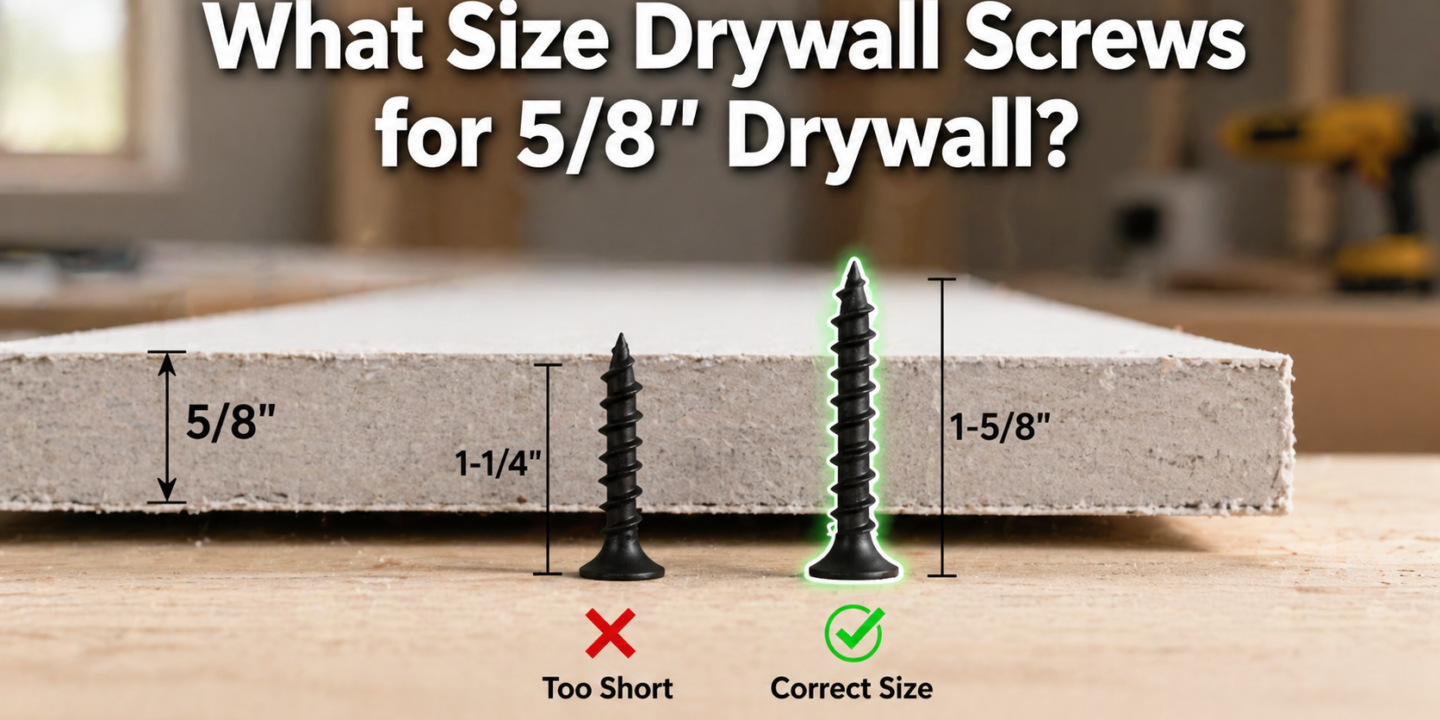



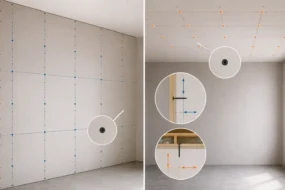
For standard installation of 5/8″ drywall on wood studs, the most common screw size is 1 5/8 inches. This provides the necessary 1-inch penetration into the framing required by most building codes. These screws typically come in #6 or #8 gauge, with #6 being the standard for most residential applications.
The reason for this specific length is simple: your screw needs to penetrate through the 5/8″ drywall thickness and drive at least 5/8″ into the wood stud behind it. This ensures a secure hold that won’t pop out over time. Using a 1 5/8″ screw gives you exactly that—5/8″ through the drywall plus about 1″ of penetration into the stud, creating a strong, lasting hold that prevents sagging or loose panels.
Key Takeaways
- For 5/8″ drywall, use 1 5/8″ screws — they provide ideal penetration and long-term holding strength.
- Choose #6 gauge for walls and #8 gauge for ceilings for added support.
- Use coarse-thread for wood studs and fine-thread for metal studs — same 1 5/8″ length applies.
Screws that are too short can cause sagging and screw pops; too long can prevent proper seating and create uneven finishes.
Why Length and Gauge Matter
Understanding screw dimensions isn’t complicated, but it makes all the difference in your installation quality.
Screw Length Explained
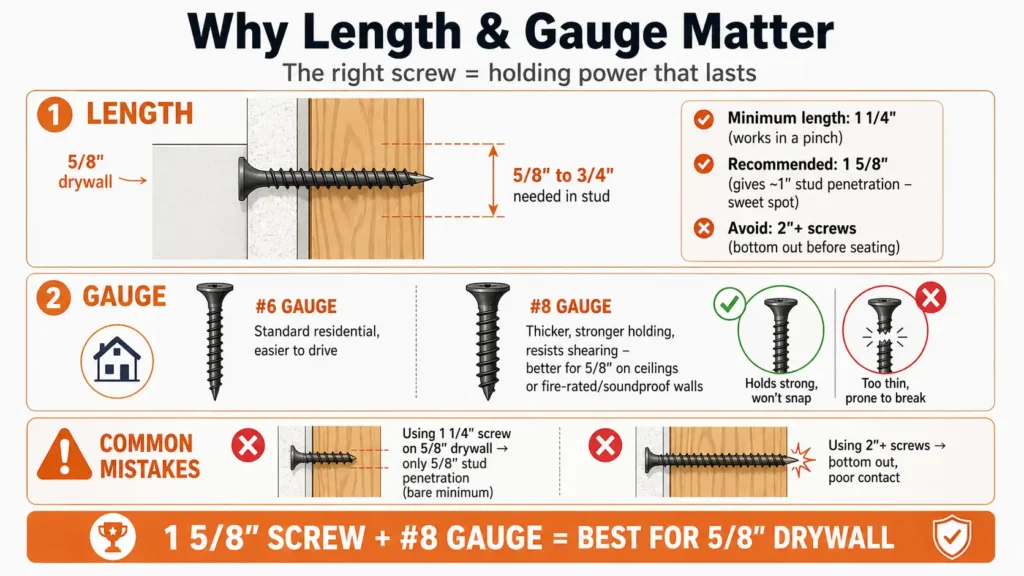
The length of your drywall screw directly impacts holding power. For 5/8″ drywall, the math works like this:
- Your drywall is 5/8″ thick.
- You need at least 5/8″ to 3/4″ of penetration into the stud.
- Total minimum length: 1 1/4″
- Recommended length: 1 5/8″
This isn’t just best practice — it’s backed by IRC Section R702.3.5, the International Residential Code standard which requires screws to penetrate a minimum of 5/8″ into wood framing for a code-compliant installation.
Gauge Matters Too
The gauge refers to the screw’s thickness. Most drywall screws come in #6 or #8 gauge:
- #6 gauge: Standard for most residential drywall applications. Thinner profile, easier to drive, sufficient for typical ceiling and wall installations.
- #8 gauge: Thicker shaft provides stronger holding power. Better for heavier 5/8″ drywall on ceilings or in commercial applications.
The thicker #8 screw resists shearing forces better and is less likely to snap during installation, especially when working with the denser 5/8″ drywall commonly used for fire-rated walls or soundproofing.
Common Mistakes to Avoid
Using a 1 1/4″ screw (designed for 1/2″ drywall) on 5/8″ material leaves only about 5/8″ of stud penetration—the bare minimum. This works in a pinch, but doesn’t provide the security you want for long-term performance.
If you’re working with standard half-inch board instead, the recommended fastener length changes significantly.
Using screws that are too long (like 2″ screws) can cause them to bottom out before the screw head properly seats against the drywall, leaving gaps and poor contact.
How to Choose the Right Screw for Your Project
The right screw choice depends on two main factors: your stud material and the specific application.
Wood Studs vs. Metal Studs
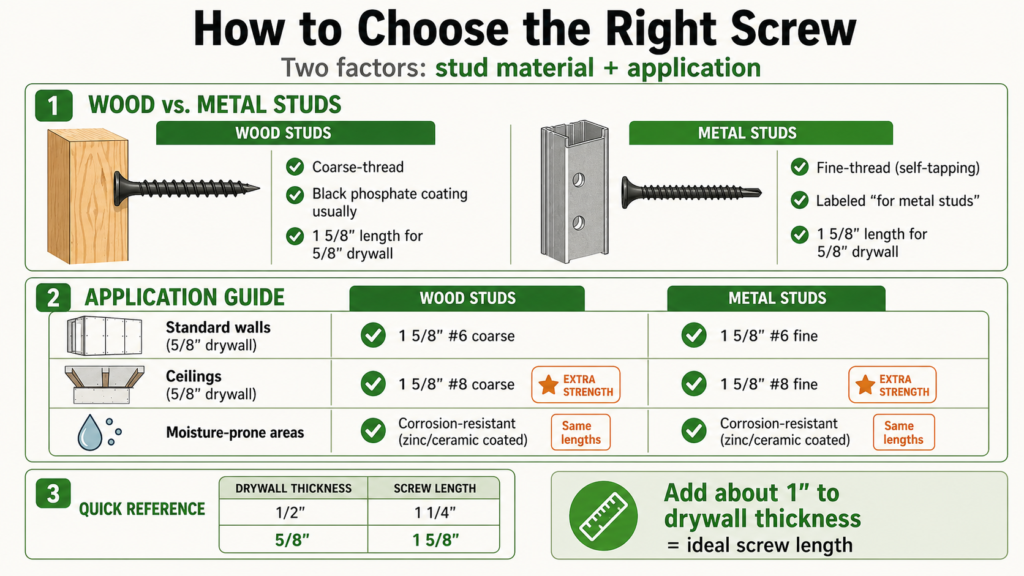
- Wood studs: Use coarse-thread drywall screws. Thread type matters, but choosing the correct drywall fastener for the application matters just as much. The wider thread spacing grips wood fibers effectively. For 5/8″ drywall, stick with 1 5/8″ coarse-thread screws.
- Metal studs: Use fine-thread (self-tapping) screws. The tighter thread pattern cuts into metal better. Same length applies—1 5/8″ for 5/8″ drywall.
You’ll see these labeled clearly at hardware stores. Coarse-thread screws usually have a black phosphate coating, while fine-thread screws often appear similar but specify “metal studs” on the packaging.
Application-Specific Considerations
For standard walls with 5/8″ drywall:
- 1 5/8″ #6 coarse-thread (wood studs)
- 1 5/8″ #6 fine-thread (metal studs)
For ceilings with 5/8″ drywall:
- 1 5/8″ #8 coarse-thread (wood studs)—the extra strength helps support the weight
- 1 5/8″ #8 fine-thread (metal studs)
For moisture-prone areas (bathrooms, basements):
- Consider corrosion-resistant screws with protective coatings.
- Same lengths apply, but look for zinc or ceramic-coated options.
Quick Reference for Other Drywall Thicknesses
While this article focuses on 5/8″ drywall, here’s the pattern for context:
- 1/2″ drywall: 1 1/4″ screws
- 5/8″ drywall: 1 5/8″ screws
The rule stays consistent: add about 1″ to your drywall thickness to get the ideal screw length.
What Happens if You Use the Wrong Size Screw?
Choosing the wrong screw size creates real problems that affect both installation quality and long-term performance.
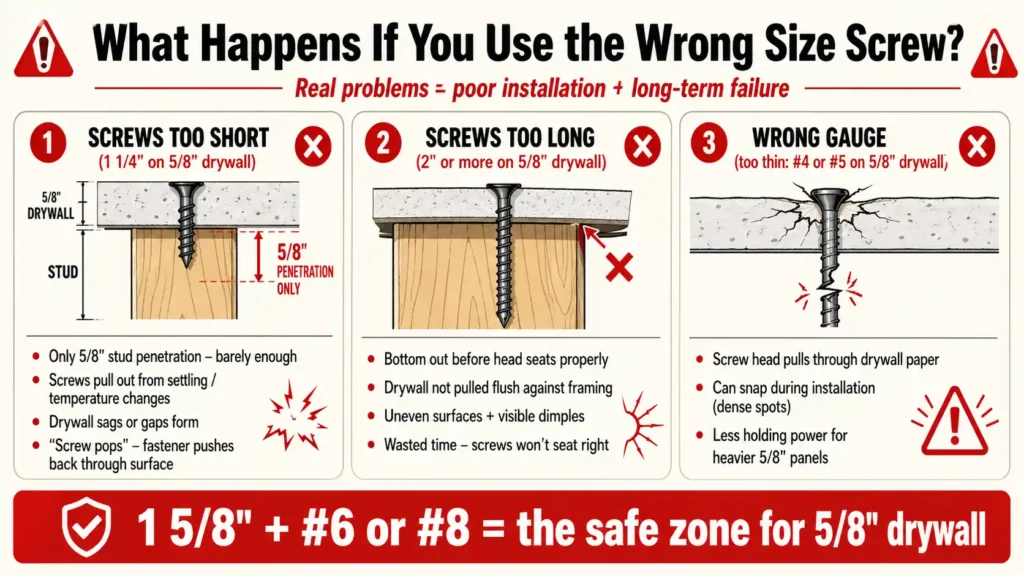
Screws That Are Too Short
When you use screws that are too short, the consequences show up over time in the form of screw pops. As professional drywall contractor Myron Ferguson explains via This Old House on what causes drywall screw pops and how to fix them, pops occur when lumber shrinks and exposes the fastener shank — and if the screw didn’t penetrate deeply enough to begin with, even minor seasonal wood movement will cause the head to push back through the drywall surface.
Screws That Are Too Long
Using 2″ or longer screws seems like it would create a stronger hold, but:
- The screw can bottom out against the back of the stud before the head properly seats.
- This leaves the drywall not pulled flush against the framing.
- Creates uneven surfaces and visible dimples
- Wastes time as you struggle to drive screws that won’t seat properly
Wrong Gauge Issues
Using screws that are too thin (#4 or #5) on 5/8″ drywall:
- Higher chance of the screw head pulling through the drywall paper
- Can snap during installation, especially when hitting dense spots
- Less holding power for the heavier 5/8″ panels
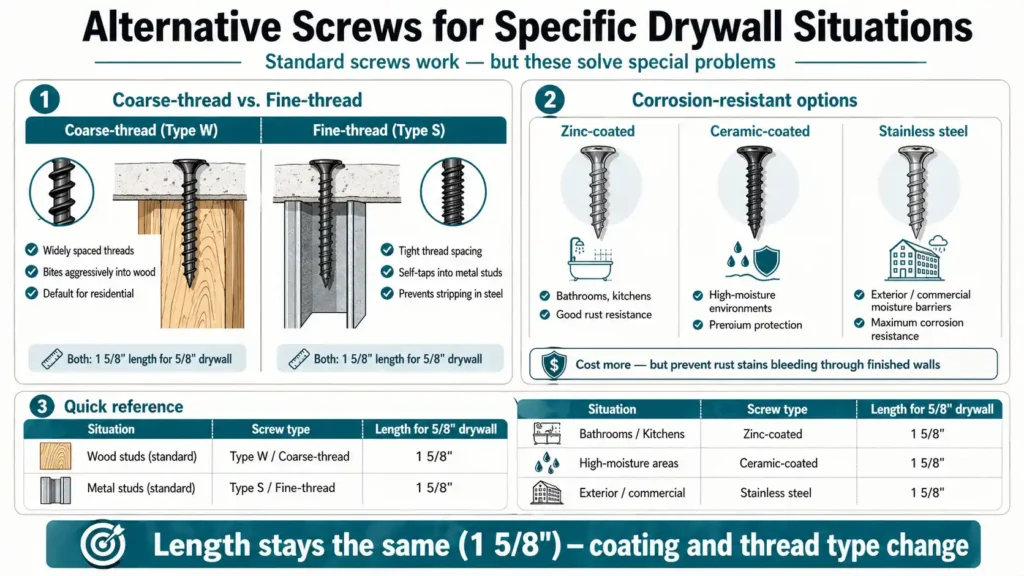
Alternative Screws for Specific Drywall Situations
While standard drywall screws work for most projects, certain situations call for specialized fasteners.
Coarse-Thread vs. Fine-Thread
Coarse-thread screws feature widely spaced threads that:
- Bite aggressively into wood.
- Works best with wood studs.
- Are the default choice for residential construction
Fine-thread screws have tighter thread spacing that:
- Self-taps into metal studs effectively
- Creates more contact points with thin metal
- Prevents stripping in steel framing
Both types come in the 1 5/8″ length you need for 5/8″ drywall.
Corrosion-Resistant Options
Standard black phosphate screws work fine in dry conditions, but moisture-prone areas like bathrooms and basements benefit from upgraded options. Bob Vila’s tested review of corrosion-resistant drywall screw options for wet areas confirms that fine-thread self-drilling screws with protective coatings are essential when moisture is a factor.
- Zinc-coated screws: Better rust resistance for bathrooms and kitchens
- Ceramic-coated screws: Premium protection for high-moisture environments
- Stainless steel screws: Maximum corrosion resistance for exterior applications or commercial moisture barriers
These specialty screws cost more but prevent rust stains from bleeding through your finished walls.
Type W vs. Type S Screws
You might see these designations:
- Type W: For wood studs (coarse-thread)
- Type S: For steel studs (fine-thread)
Both are available in the 1 5/8″ length for 5/8″ drywall applications.
Making Your Purchase
When you head to the hardware store, you’ll typically find drywall screws sold in boxes or bulk containers. For 5/8″ drywall, ask for:
- “1 5/8 inch drywall screws, coarse thread” (for wood studs)
- “1 5/8 inch drywall screws, fine thread” (for metal studs)
Most boxes clearly label the length and thread type on the front. Major brands like Grip-Rite, Senco, and Hillman all manufacture quality options that perform well.
For a standard room (say, 12’ x 12’), you’ll use approximately 5 screws per square foot of drywall, so plan accordingly when buying.
The bottom line:
For 5/8″ drywall, stick with 1 5/8″ screws in the appropriate thread type for your studs. This combination provides the penetration depth needed for secure holding power without the complications of using screws that are too short or too long.
Get this right, and your drywall installation will stay solid for decades—provided you stay vigilant against structural pests and keep an eye out for early signs of termites in your drywall or ceiling that could weaken the material over time


Elena Hart is the founder and lead writer of Better Home Pro. She writes about drywall, home repair, and practical DIY home improvement topics, focusing on clear, useful information that helps homeowners make better decisions. Her work combines firsthand experience, manufacturer documentation, industry resources, and careful research to create content that is accurate, practical, and easy to understand. Through Better Home Pro, Elena aims to simplify complex home improvement topics and provide guidance that is genuinely helpful to homeowners and DIYers.







No Comments