


Most contractors charge between $1.50 and $3.00 per square foot for hanging drywall, which works out to roughly $12 to $24 per standard 4×8 sheet. That range covers labor only, not materials, tape, or finishing work.
Where you land in that range depends on a few real factors: whether you’re doing walls or ceilings, how many stories the building has, the complexity of the layout, and local labor rates in your area. A straightforward single-story wall job on a crew’s schedule will always cost less per sheet than ceiling work in a multi-story remodel. The numbers below will help you understand why, and what questions to ask before accepting a quote.
Key Takeaways:
- Drywall hanging labor costs $12 to $24 per standard 4×8 sheet, which equals roughly $1.50 to $3.00 per square foot for labor only.
- Ceiling installation costs 20% to 40% more than walls due to the extra physical difficulty and the need for specialized lifting equipment.
- Hanging is only 30% to 50% of the total cost, as taping, mudding, and sanding are priced separately and often cost more than installation.
- New construction labor is cheaper than remodeling because open framing allows faster installation without existing obstacles or layout constraints.
- Per-sheet or per-square-foot bids protect your budget better than hourly rates, which can balloon if the installation crew runs into delays.
Typical Labor Cost Per Sheet
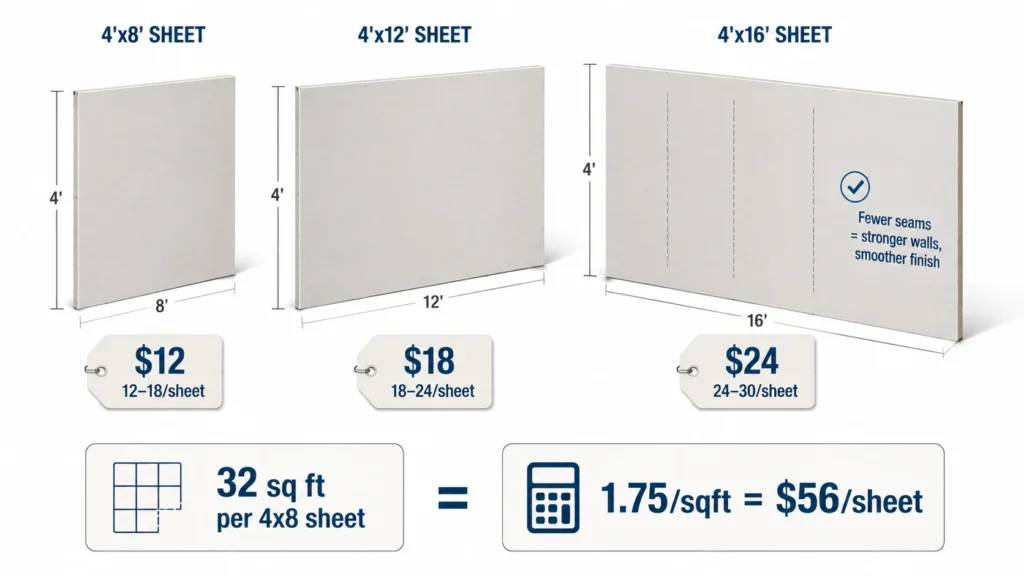
For a standard 4×8 sheet on a flat wall, expect to pay somewhere in the $12 to $18 range per sheet in most parts of the country. This assumes a reasonably experienced crew working on a clean, uncomplicated framing layout.
Larger sheets, like 4×12 or 4×16, cover more area per piece, which can slightly lower the per-sheet count on a job. However, installers sometimes charge a small premium for handling larger sheets because they’re heavier and more awkward to maneuver, especially in tight spaces. On balance, larger sheets tend to be more economical overall because they reduce the number of seams.
If you’re getting quotes based on square footage rather than per sheet, the math still works out the same. A 4×8 sheet is 32 square feet, so at $1.75 per square foot, you’re paying $56 per sheet. Make sure you’re comparing apples to apples when reviewing bids.
Factors That Affect Labor Cost
Wall vs. Ceiling
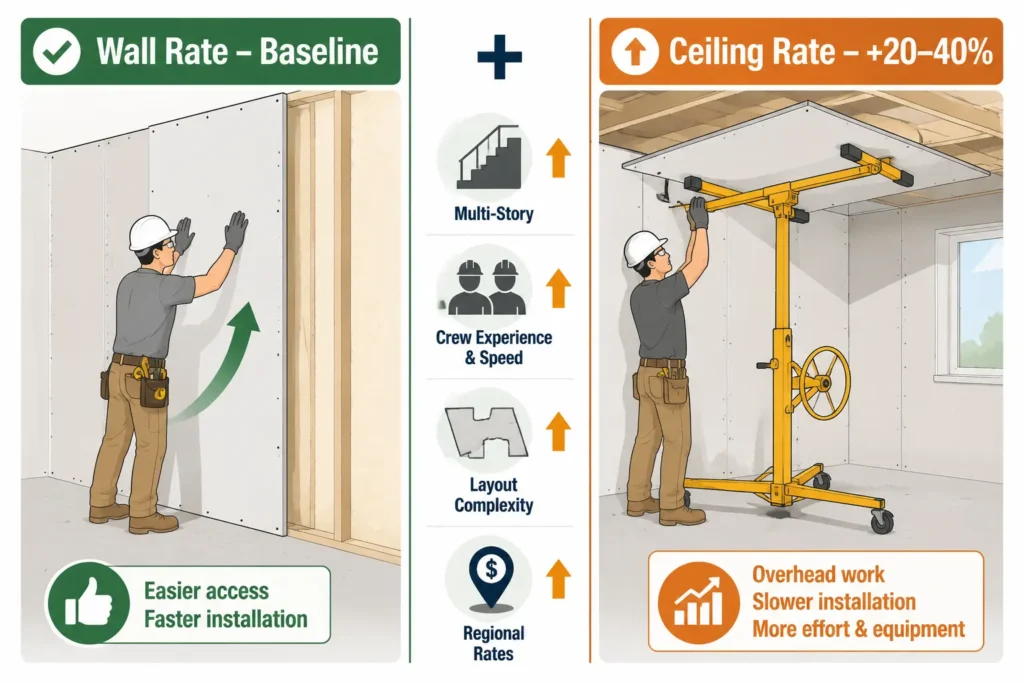
Ceiling installation consistently costs more than walls. Hanging sheets overhead is physically harder, slower, and often requires additional labor or specialized equipment. To speed up the process and stay safe, professional crews frequently use a drywall lift to hoist panels into place overhead. Expect ceiling labor to run 20 to 40 percent higher than the wall rate, sometimes more if the ceiling height is above standard.
Single-Story vs. Multi-Story
Multi-story work adds cost because sheets have to be carried up stairs or even hoisted through openings. Crews move slower, fatigue faster, and the logistics are more involved. A two-story addition or a second-floor bedroom remodel will typically see higher per-sheet labor than a single-story addition.
Crew Experience and Speed
Experienced two-person crews can hang 50 to 80 sheets per day on straightforward walls. Slower or less experienced crews hang considerably fewer, but don’t assume slower always means cheaper. A seasoned crew charging $2.50 per sheet and finishing in two days may cost less overall than a crew charging $1.75 per sheet and taking four days.
Speed also affects quality. Crews that move efficiently tend to fit sheets more precisely and make cleaner cuts around outlets and corners using a sharp drywall saw or a rotary cutout tool.
Layout Complexity
Open rectangular rooms are easy. Kitchens with soffits, bathrooms with plumbing cutouts, rooms with arches, vaulted ceilings, or irregular angles all slow work down. Each unusual condition adds time per sheet. Some contractors price complex areas separately rather than including them in the base per-sheet rate, so ask about this upfront.
Regional Labor Rates
Labor costs vary significantly by location. In higher cost-of-living metros like New York, San Francisco, or Seattle, $3 to $4 per square foot is common. In lower-cost rural areas or parts of the South and Midwest, you might find rates closer to $1.25 to $1.75 per square foot. Always anchor your budget to local rates rather than national averages.
Labor Cost vs. Total Project Cost
Hanging drywall is only one part of a complete drywall job. Most homeowners are eventually getting a finished wall, which involves taping, applying joint compound (mud), sanding, and priming. Those finishing steps are usually priced separately and often cost as much or more than the hanging itself.
A rough breakdown for a fully finished drywall job typically looks like:
- Hanging labor: $1.50 to $3.00 per square foot
- Finishing labor (tape, mud, sand): $1.00 to $2.50 per square foot
- Materials (drywall, screws, corner bead, tape, mud): $0.50 to $1.50 per square foot
So a complete installed-and-finished job might run $3.00 to $7.00 per square foot depending on location, finish level, and complexity. If a contractor quotes you an all-in price, make sure you understand what’s included before comparing it to per-sheet numbers you’ve seen elsewhere.
Complex features like rounded corners, decorative niches, or tile backer in wet areas will add cost beyond standard labor rates.
Ways to Reduce Labor Costs
Do Some Prep Work Yourself
Pre-cutting sheets to fit specific areas, labeling them, and staging them near the installation area can save a crew meaningful time. Installers charge for their time from the moment they’re on-site, so anything you can do before they arrive reduces your bill.
Handle Tear-Out and Debris Removal
If you’re remodeling, removing old drywall yourself before the crew arrives eliminates a common upsell. Some contractors charge separately for demo and disposal.
Use Larger Sheets Where Possible
Fewer sheets mean fewer seams and faster installation. If your ceilings are 9 or 10 feet, using 4×10 or 4×12 sheets instead of 4×8 reduces cuts and speeds up the job on walls.
Book Efficiently
Crews prefer jobs where they can work continuously without waiting for other trades. If your framing inspection is done, your rough electrical and plumbing are complete, and the space is clear, you’re more likely to get a better rate and keep the crew moving without delays.
Common Misunderstandings About Drywall Labor
Per-Sheet vs. Per-Hour Quotes
Some smaller contractors or solo operators quote by the hour rather than per sheet. Per-sheet pricing is generally better for the homeowner because you know the cost upfront regardless of how long it takes. Hourly quotes can balloon if the work is slower than expected.
Hidden Fees
Travel charges, minimum job fees, or charges for unusually high ceilings sometimes appear as line items. Ask before you sign anything. A quote that looks cheap per sheet can still come in high if there’s a $200 travel fee or a minimum day rate built in.
Misestimating Ceilings and Tall Walls
Homeowners frequently underestimate ceiling square footage in their calculations. Ceilings on a 2,000 square foot house add significant area, and since they cost more per sheet to hang, the ceiling portion of the budget often surprises people. Calculate it separately.
Labor Doesn’t Include Fasteners
Most per-sheet labor quotes don’t include screws or nails. Those are either billed as materials or come included in a full supply-and-install quote. Clarify this before finalizing a contract.
Quick FAQ
How many sheets can a crew hang per day? An experienced two-person crew typically hangs 50 to 80 sheets on straightforward walls. Ceilings, irregular layouts, or limited access can cut that number significantly.
Is labor cheaper for new construction than remodeling? Generally yes. New construction offers clean, unobstructed framing with no existing finishes to protect or work around. Remodels often involve tighter spaces, existing obstacles, and more careful handling, all of which slow the work down.
How much does hanging drywall cost for a ceiling vs. a wall? Ceiling labor typically runs 20 to 40 percent more per sheet than standard wall work, sometimes higher for vaulted or cathedral ceilings where lifts or scaffolding are required.
Does labor cost include fasteners? Not usually. Screws and other fasteners are typically billed as materials unless the contractor is providing a full supply-and-install quote. Always confirm what’s included.


Elena Hart is the founder and lead writer of Better Home Pro. She writes about drywall, home repair, and practical DIY home improvement topics, focusing on clear, useful information that helps homeowners make better decisions. Her work combines firsthand experience, manufacturer documentation, industry resources, and careful research to create content that is accurate, practical, and easy to understand. Through Better Home Pro, Elena aims to simplify complex home improvement topics and provide guidance that is genuinely helpful to homeowners and DIYers.










No Comments